

Why It Matters
You have important work to do. You’re leading, learning, making decisions that matter. But your brain burns through energy faster than you think. Creatine feeds your brain exactly what it needs to keep you focused, sharp and mentally strong when the pressure is on.
Your brain uses up to 20% of your body’s energy even when you’re resting. When that energy drops, you feel it. Focus fades. Memory slows down. Simple decisions start feeling hard.
Creatine works as a natural energy buffer inside your brain cells. It replenishes ATP so your mental energy stays stable throughout the day. You get real clarity and resilience without caffeine, without crashes, without stimulants.
Research from 2020–2025 confirms creatine’s role in sustaining cognitive performance under mental fatigue, sleep loss, and stress.
Creatine Cognitive Benefits
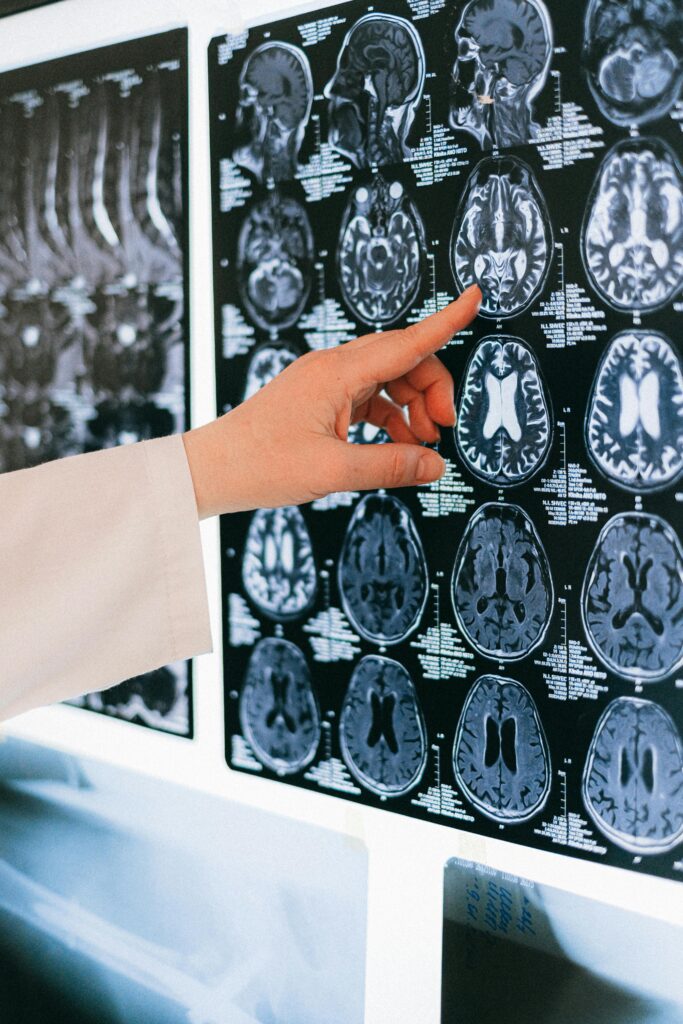
Clinically Proven Brain Benefits
1. Improves Working Memory & Cognitive Function
Creatine enhances short-term memory, reasoning, and overall brain performance, particularly under mental fatigue or sleep deprivation. Research confirms measurable improvements in working memory and processing speed in healthy adults.
(Avgerinos et al., Neurosci Biobehav Rev, 2018; Xu et al., Front Nutr, 2024; Roschel et al., Nutrients, 2021)
2. Enhances Resilience to Mental Fatigue
Creatine helps sustain accuracy, focus, and reaction time during cognitive stress or sleep loss by replenishing brain energy stores. The effect is most consistent under high cognitive load.
(Gordji-Nejad et al., Sci Rep, 2024)
3. Supports Brain Health with Age
In older adults, creatine may improve memory and executive function while supporting long-term brain energy metabolism. Benefits appear strongest when combined with resistance exercise.
(McMorris et al., Exp Gerontol, 2007; Forbes, S.C. et al., 2022)
4. Promotes Emotional Balance
By supporting neuronal energy and serotonin regulation, creatine may help reduce mental fatigue and improve mood stability under stress. Preliminary data suggest potential benefits for mood disorders.
(Roitman et al., J Affect Disord, 2007; Kious et al., Biomolecules, 2019; Bakian et al., Transl Psychiatry, 2020)
5. Unique Contribution for Women
Emerging evidence suggests creatine supports cognitive function, mood, and energy balance in women — particularly around menopause and during high physical or mental demand.
(Smith-Ryan et al., Nutrients, 2021; Gordon et al., Med Sci Sports Exerc, 2023)
Creatine Cognitive Benefits
Creatine isn’t just for muscles — it’s a proven molecule for brain energy, clarity, and resilience.
Research consistently shows measurable improvements across memory, focus, stress tolerance, and cognitive endurance.
Memory, Attention & Processing Speed
A recent meta-analysis of 16 randomized controlled trials found significant improvements in working memory, attention, and processing speed in healthy adults supplemented with creatine.
Xu et al., 2024 — Frontiers in Nutrition
Sleep-Deprived Cognition
After 21 hours without sleep, participants given a single high dose (0.35 g/kg) of creatine maintained sharper thinking and better task performance compared to placebo.
Gordji-Nejad et al., 2024; Rae C., Digney AL., McEwan SR., Bates TC. 2003;
Executive Function & Stress Resilience
Under intense cognitive load, creatine supplementation helped preserve decision accuracy and reaction control, even under fatigue or stress.
Rae et al., 2003 — Proceedings of the Royal Society B: Biological Sciences
Cognitive Protection & Aging
Systematic reviews show creatine offers neurocognitive benefits for older adults, improving memory and executive function, especially under metabolic or sleep-related stress.
Candow et al., 2022 — Sports Medicine
In summary:
Over 100 peer-reviewed studies confirm creatine’s ability to restore ATP in neurons, boost focus, and protect the brain against cognitive fatigue.
Creatine supplementation improves working memory, fluid intelligence, and reaction time — especially under mentally demanding conditions.
Rae et al., Proceedings of the Royal Society B, 2003
Creatine significantly reduces mental fatigue and improves brain performance during sleep deprivation.
Gordji-Nejad et al., Scientific Reports, 2024
Creatine acts as a brain energy buffer — enhancing cognition during high-load tasks and improving task accuracy.
McMorris et al., Neuropsychologia, 2007
Creatine increases brain phosphocreatine stores, supporting energy metabolism and cognitive performance.
Dechent et al., American Journal of Neuroradiology, 2002
Creatine supplementation enhances cognitive function in aging populations and may protect against neurodegeneration.
Avgerinos et al., Neuroscience & Biobehavioral Reviews, 2018
Creatine improved decision-making speed and reduced cognitive decline in older adults — even without physical activity.
Ling et al., 2023 (PubMed: 35984306)
Creatine may serve as a fast-acting, natural antidepressant by improving brain bioenergetics and synaptic health.
Allen et al., Frontiers in Nutrition, 2021
Creatine improved cognitive function in individuals with depression, particularly when used alongside standard treatment.
Kondo et al., Pharmacopsychiatry, 2011
In traumatic brain injury patients, creatine supplementation reduced dizziness, fatigue, and improved cognitive recovery.
Sakellaris et al., Acta Paediatrica, 2006
Creatine is one of the few ergogenic aids that benefits both muscular and cognitive performance — safely and effectively.
Kreider et al., Journal of the International Society of Sports Nutrition, 2022
Supplementation leads to a 10–20% boost in performance during high-intensity or repeated efforts — critical for strength and power sports.
Kreider et al., 2003
Creatine enhances phosphocreatine resynthesis during high-intensity training, allowing for more reps, greater workload, and faster adaptation.
Rawson & Persky, Sports Medicine, 2023
Creatine reduces markers of inflammation and muscle damage post-exercise — promoting faster comeback between training blocks.
Santos et al., 2004
Who Benefits Most
Entrepreneurs & professionals
Decision speed, focus under stress
Students & creatives
Mental stamina, recall, task switching
Parents & multitaskers
Sharper thinking, emotional regulation
Women in hormonal transition
Support for clarity, mood, energy
Adults 50+
Cognitive protection, memory performance
Suggested Use for Mental Performance
For optimal cognitive support, a daily intake of at least 3 g of creatine is recommended.
This base dose supports energy metabolism in the brain, mental clarity, and long-term cognitive function.
The following additional doses can be used to match increased mental demands:
| Goal | Timing | Additional Dose |
|---|---|---|
| Enhanced focus & productivity | Morning or pre-task | +2 g |
| Mood balance & hormonal support | With first meal | +2–3 g |
| Sleep-deprived / high-stress days | 30–60 min before task | +5–7 g (short-term use) |
Daily creatine use is essential for consistent brain performance.
For intense cognitive stress or recovery from sleep loss, short-term intake of 10–15 g total/day is supported by research. For better tolerance, split the daily amount into smaller doses (e.g., 2×5 g spaced across the day).
→ Avgerinos et al., 2018, McMorris et al., 2007
Why Choose QLEOS?
| Feature | What It Means for You |
|---|---|
| Particle Optimization | Dissolves instantly — no grit or bloating |
| >99% Lab-Tested Purity | Pharmaceutical-grade cleanliness, verified by HPLC |
| Cognitive-Grade Performance | Supports ATP, focus & mental resilience |
| Trusted Across Disciplines | Used by athletes, entrepreneurs & students |
| Clinically Backed | Every claim supported by research, not marketing |
Fuel Your Most Important Asset
Every decision, idea, and moment of clarity begins in the brain. QLEOS Optimized Creatine powers your neurons with pure ATP energy, helping you think faster, focus longer, and stay sharp under pressure.
No stimulants. No crash. Just clean, proven brain fuel.