

Mitochondrial energy and creatine are tightly linked—when demand spikes, the PCr system helps keep ATP stable for strength, focus, and recovery. Almost everyone knows the feeling of being low on energy—muscles feel heavy, focus drops, recovery takes longer. We usually blame sleep, stress, or nutrition, and often that is true. But at a deeper level, energy problems begin inside our cells.
Every movement, thought, and heartbeat depends on tiny structures called mitochondria. These organelles produce the energy that keeps cells alive and functional. When mitochondrial energy production struggles to keep up with demand, performance declines—physically and mentally.
Creatine is widely known for strength and power, but what’s less discussed is its role in cellular energy management, especially in relation to mitochondria. Research suggests creatine is not simply “extra fuel,” but part of a system that helps cells distribute, stabilize, and protect energy where and when it’s needed most.
“Mitochondria don’t just make energy — they decide how long your cells can keep performing under stress.”
What Mitochondria Do: How Cells Make Energy (ATP)
Mitochondria are often called the “power plants” of the cell, but a better analogy is a power station connected to a city-wide grid. Inside mitochondria, nutrients are converted into ATP (adenosine triphosphate)—the molecule that directly powers cellular work. Tissues with high and rapidly changing energy demands—such as skeletal muscle, the heart, and the brain—depend heavily on efficient mitochondrial function. This constant output is the foundation of mitochondrial energy production and overall cellular energy metabolism.
ATP Basics: Why Energy Demand Spikes in Seconds
The challenge is timing: mitochondria are excellent at producing ATP steadily, but they can’t instantly match sudden spikes in energy demand. During intense exercise, rapid movement, or cognitive stress, ATP use can rise faster than mitochondria alone can supply it. This is where the creatine system becomes essential. When ATP demand spikes, mitochondrial energy and creatine become part of the same solution: keep cellular output stable when the system is under pressure.
Mitochondrial Energy and Creatine Connection
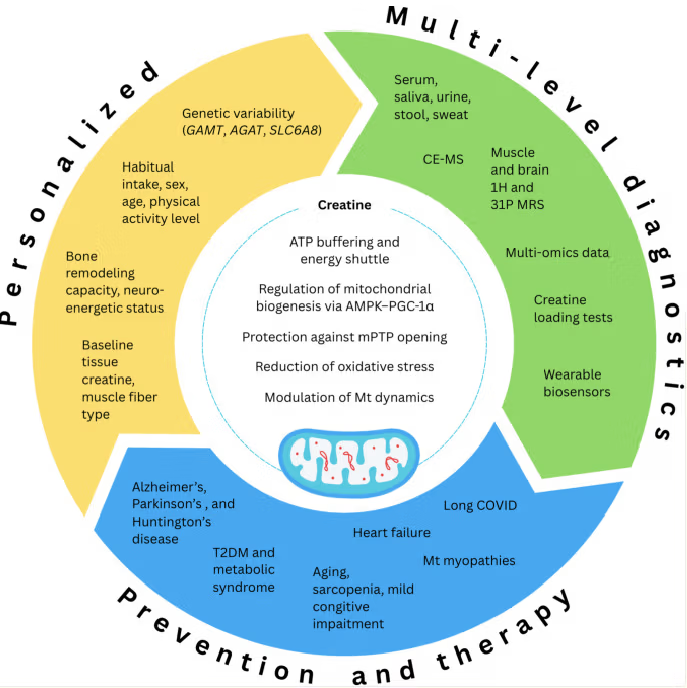
This is where mitochondrial energy and creatine connect: phosphocreatine (PCr) buffers ATP and moves energy to where it’s needed fastest. Creatine works through the creatine–phosphocreatine (PCr) shuttle, which acts as both an energy buffer and an energy transport network inside cells.
Near mitochondria, ATP is used to convert creatine into phosphocreatine. Phosphocreatine then moves through the cell to places where energy is being consumed—muscle fibers, ion pumps, or synapses in the brain. There, phosphocreatine rapidly regenerates ATP exactly where it’s needed.
This helps cells:
- keep ATP levels stable during sudden demand
- avoid large energy fluctuations
- reduce stress on mitochondria during peak workload.
Mitochondrial Creatine Kinase (mtCK): The Mitochondrial Energy Link
A key player in this process is mitochondrial creatine kinase (mtCK), located between mitochondrial membranes. Mitochondrial creatine kinase (mtCK) helps link ATP production to energy transport, improving cellular energy homeostasis under stress.
MtCK connects ATP production inside mitochondria with phosphocreatine formation outside them. This improves energy efficiency and also supports mitochondrial structure. In simple terms: creatine doesn’t sit near mitochondria by accident—it’s built into the way mitochondria function and stay organized under stress.
“Creatine isn’t just ‘stored energy’—it’s a rapid energy-transfer system, linking mitochondrial ATP production to where energy is used most.”
Creatine and Mitochondrial Stress: ROS, Membranes, and the mPTP
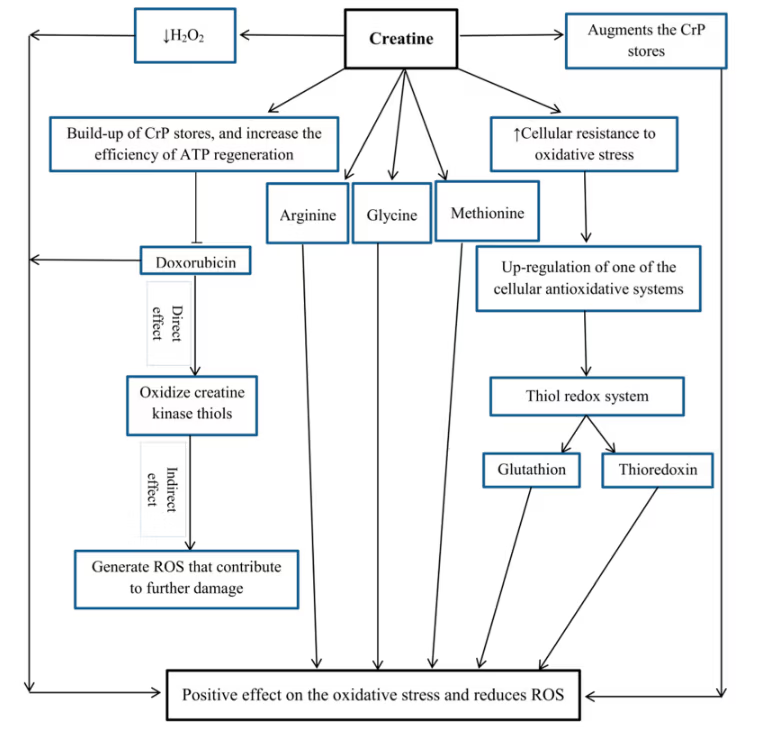
Mitochondria are also a major source of reactive oxygen species (ROS), especially when energy demand is high or poorly regulated. Excess oxidative stress can damage mitochondrial membranes, proteins, and DNA.
Research suggests the creatine system may reduce this stress indirectly by:
- stabilizing the ATP/ADP ratio
- preventing excessive mitochondrial overactivation
- supporting membrane integrity
In other words, creatine may help mitochondria stay resilient and functional under stress — when energy demand is highest. Creatine has also been linked to reduced sensitivity of the mitochondrial permeability transition pore (mPTP)—a process involved in mitochondrial breakdown under extreme stress. By supporting energy balance, creatine may help mitochondria stay functional instead of entering failure modes during metabolic overload.
Ultimately, mitochondrial energy and creatine work together to buffer ATP and keep cellular output stable when life or training demands more.
Does Creatine Increase Mitochondria? What Research Suggests About Biogenesis
Some studies have explored whether creatine increases mitochondrial number (mitochondrial biogenesis). Evidence here is mixed. While evidence for increased mitochondrial biogenesis is mixed, support for mitochondrial resilience and energy stability is more consistent.
What appears more consistent is that creatine improves how existing mitochondria integrate into the cell’s energy network. Instead of forcing mitochondria to work harder, creatine helps distribute energy more intelligently—supporting performance, recovery, and resilience without necessarily increasing aerobic capacity on its own. In simple terms, mitochondrial energy and creatine work together to buffer ATP and reduce metabolic stress during sudden demand.
Mitochondrial Energy and Creatine in Real Life
Skeletal Muscle (training + recovery)
In muscle tissue, the creatine–mitochondria relationship is especially relevant during repeated or high-intensity efforts. The phosphocreatine system helps sustain force output while protecting mitochondria from constant overload—supporting recovery and training tolerance over time.
Brain (focus + metabolic stress)
The brain is highly energy-demanding. Neurons rely on stable ATP supply to maintain signaling and neurotransmission. Brain cells use the same creatine-based buffering system found in muscle. Under metabolic stress—sleep deprivation, hypoxia, or neurological disease—creatine may help stabilize neuronal energy metabolism and reduce vulnerability to mitochondrial dysfunction. This is another place where mitochondrial energy and creatine matter, because neurons depend on stable ATP to function.
Aging (energy resilience)
Aging is associated with gradual declines in mitochondrial efficiency and cellular energy regulation. By supporting intracellular energy buffering and mitochondrial stability, creatine has been investigated for maintaining cellular energy balance with age—though more long-term human studies are still needed.
At QLEOS, we believe real performance is built from the inside out.
Our ultra-pure, ultra-fine creatine is made to mix smoothly, feel light on the stomach, and fit effortlessly into a consistent routine — for athletes who value long-term energy, recovery, and cellular resilience.
Because performance depends on energy stability — from mitochondria to movement.
Study Reference
Arazi, H., Eghbali, E., & Suzuki, K. (2021). Creatine Supplementation, Physical Exercise and Oxidative Stress Markers: A Review of the Mechanisms and Effectiveness. Nutrients, 13(3), 869. [link]
Marshall, R. P., Droste, J.-N., Giessing, J., & Kreider, R. B. (2022). Role of Creatine Supplementation in Conditions Involving Mitochondrial Dysfunction: A Narrative Review. Nutrients, 14(3), 529. [link]
Ostojic, S. M., & Rátgéber, L. (2025). Creatine as a mitochondrial theranostic in predictive, preventive, and personalized medicine. EPMA Journal, 16(3), 541–553. [link]